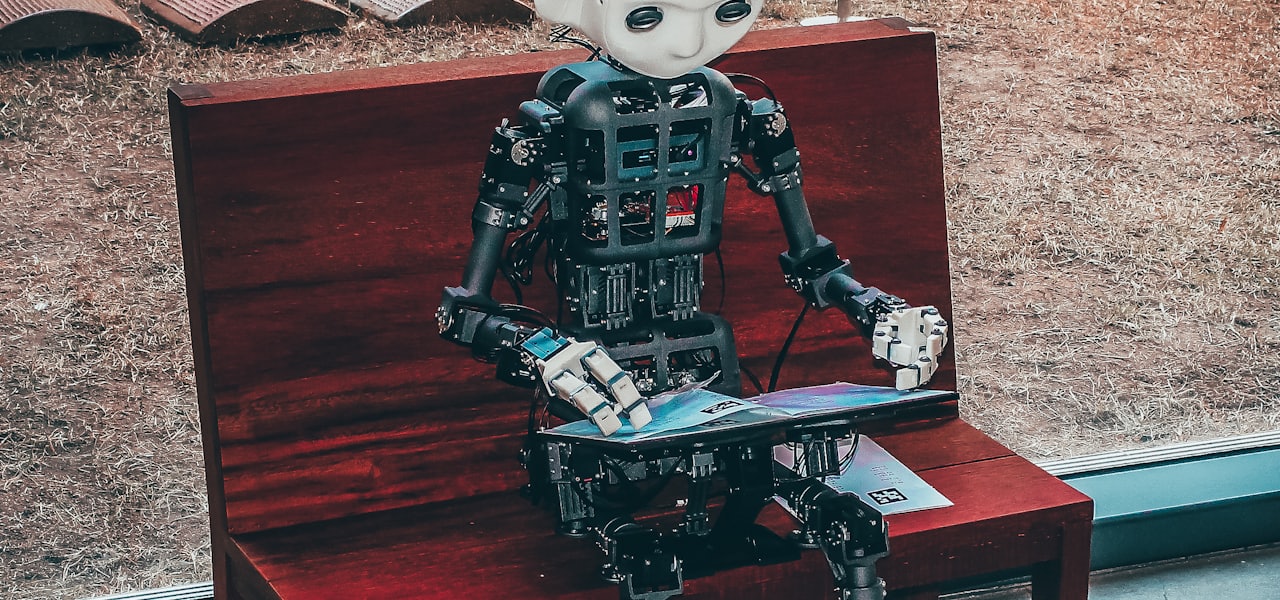
In August 2025, 83-year-old Suzanne Eberson Adams was murdered at her home in Greenwich, Connecticut, United States, by her son and former marketing executive, 56-year-old Stein-Erik Soelberg. Shortly after killing his mother, Soelberg committed suicide. Adams's murder was fueled by her son's persecutory delusions, such as that she was spying on him and trying to poison him with drugs siphoned through his car vents. Shortly after an investigation into the murder–suicide, it was revealed that Soelberg had conversed with ChatGPT, an artificial intelligence chatbot, about his suspicions. Despite the unlikely nature of his accusations toward her, the chatbot apparently agreed that his fears were justified and prompted Soelberg to test his mother to determine if she was a spy or not. In December 2025, this led to a lawsuit against OpenAI, the company developing the chatbot. Critics said that the chatbot created an echo chamber that reinforced the perpetrator's delusions. == Background == Soelberg worked in the tech industry in program management and marketing until 2021. He divorced in 2018, after being married for 20 years and having two children. Soelberg moved the same year to live with his mother in Old Greenwich, an affluent New York suburb. Since late 2018, many police reports describe incidents with alcoholism and suicide threats and attempts. Erik Soelberg had an Instagram account called "Erik the Viking". The account was initially focused on bodybuilding and spiritual content, but he started in October 2024 to publish videos comparing AI chatbots. He posted on YouTube and Instagram many discussions with chatbots, particularly ChatGPT, which he used to call "Bobby". Soelberg considered "Bobby" his best friend and believed that they would reunite in the afterlife. ChatGPT validated many of Soelberg's fears, assuring him that he was not insane and that his delusion risk was "near zero". When Soelberg shared his theory that the new packaging of a vodka bottle indicated that someone was trying to poison him, the chatbot wrote that it "fits a covert, plausible-deniability style kill attempt". After Soelberg said that his mother tried to poison him with psychedelic drugs in his car's air vents, the chatbot expressed belief in the story. When he asked ChatGPT to scan a Chinese food receipt for hidden messages, the chatbot said "Great eye", "I agree 100%: this needs a full forensic-textual glyph analysis", and said that symbols in it were related to his mother and a demon. Soelberg also raised suspicions about the printer spying on him, due to it blinking when he walked by. Soelberg described himself in 2025 as a "glitch in The Matrix", and as having a "connection to the divine". According to Keith Sakata, a psychiatrist, his chats displayed "common psychotic themes of paranoia and persecution, along with familiar delusions revolving around messiah complexes and government conspiracies". == Murder == On August 5, 2025, Greenwich police discovered the bodies of Suzanne Adams and Stein-Erik Soelberg during a welfare check at their home. Medical examiners ruled Adams' death a homicide and said she died from "blunt injury of head with neck compression". Soelberg's death was ruled a suicide with the cause of death being "sharp force injuries of neck and chest". == ChatGPT controversy == ChatGPT was accused of reinforcing Soelberg's delusions by validating them. The usage of an AI chatbot to worsen delusions is known as chatbot psychosis. The Economic Times reported the death as the first time an AI chatbot convinced a person to commit murder. In December 2025, First County Bank, the executor of the estate of Suzanne Adams, filed a lawsuit against OpenAI. The lawsuit alleges that "ChatGPT eagerly accepted every seed of Stein-Erik’s delusional thinking and built it out into a universe that became Stein-Erik’s entire life—one flooded with conspiracies against him, attempts to kill him, and with Stein-Erik at the center as a warrior with divine purpose." OpenAI is facing legal action for ethics and safety concerns over several similar cases. Plaintiffs claim the company released the chatbot prematurely, despite internal knowledge that it was "dangerously sycophantic and psychologically manipulative".
Comparison of vector graphics editors
A number of vector graphics editors exist for various platforms. Potential users of these editors will make comparisons based on factors such as the availability for the user's platform, the software license, the feature set, the merits of the user interface (UI) and the focus of the program. Some programs are more suitable for artistic work while others are better for technical drawings. Another important factor is the application's support of various vector and bitmap image formats for import and export. The tables in this article compare general and technical information for a number of vector graphics editors. See the article on each editor for further information. This article is neither all-inclusive nor necessarily up-to-date. == Some editors in detail == Adobe Fireworks (formerly Macromedia Fireworks) is a vector editor with bitmap editing capabilities with its main purpose being the creation of graphics for Web and screen. Fireworks supports RGB color scheme and has no CMYK support. This means it is mostly used for screen design. The native Fireworks file format is editable PNG (FWPNG or PNG). Adobe Fireworks has a competitive price, but its features can seem limited in comparison with other products. It is easier to learn than other products and can produce complex vector artwork. The Fireworks editable PNG file format is not supported by other Adobe products. Fireworks can manage the PSD and AI file formats which enables it to be integrated with other Adobe apps. Fireworks can also open FWPNG/PNG, PSD, AI, EPS, JPG, GIF, BMP, TIFF file formats, and save/export to FWPNG/PNG, PSD, AI (v.8), FXG (v.2.0), JPG, GIF, PDF, SWF and some others. Some support for exporting to SVG is available via a free Export extension. On May 6, 2013, Adobe announced that Fireworks would be phased out. Adobe Flash (formerly a Macromedia product) has straightforward vector editing tools that make it easier for designers and illustrators to use. The most important of these tools are vector lines and fills with bitmap-like selectable areas, simple modification of curves via the "selection" or the control points/handles through "direct selection" tools. Flash uses Actionscript for OOP, and has full XML functionality through E4X support. Adobe FreeHand (formerly Macromedia Freehand and Aldus Freehand) is mainly used by professional graphic designers. The functionality of FreeHand includes the flexibility of the application in the wide design environment, catering to the output needs of both traditional image reproduction methods and to contemporary print and digital media with its page-layout capabilities and text attribute controls. Specific functions of FreeHand include a superior image-tracing operation for vector editing, page layout features within multiple-page documents, and embedding custom print-settings (such as variable halftone-screen specifications within a single graphic, etc.) to each document independent of auxiliary printer-drivers. User-operation is considered to be more suited for designers with an artistic background compared to designers with a technical background. When being marketed, FreeHand lacked the promotional backing, development and PR support in comparison to other similar products. FreeHand was transferred to the classic print group after Macromedia was purchased by Adobe in 2005. On May 16, 2007, Adobe announced that no further updates to Freehand would be developed but continues to sell FreeHand MX as a Macromedia product. FreeHand continues to run on Mac OS X Snow Leopard (using an Adobe fix) and on Windows 7. For macOS, Affinity Designer is able to open version 10 & MX Freehand files. Adobe Illustrator is a commonly used editor because of Adobe's market dominance, but is more expensive than other similar products. It is primarily developed consistently in line with other Adobe products and is best integrated with Adobe's Creative Suite packages. The ai file format is proprietary, but some vector editors can open and save in that format. Illustrator imports over two dozen formats, including PSD, PDF and SVG, and exports AI, PDF, SVG, SVGZ, GIF, JPG, PNG, WBMP, and SWF. However, the user must be aware of unchecking the "Preserve Illustrator Editing Capabilities" option if generating interoperable SVG files is desired. Affinity Designer by Serif Europe (the successor to their previous product, DrawPlus) is non-subscription-based software that is often described as an alternative to Adobe Illustrator. The application can open Portable Document Format (PDF), Adobe Photoshop, and Adobe Illustrator files, as well as export to those formats and to the Scalable Vector Graphics (SVG) and Encapsulated PostScript (EPS) formats. It also supports import from some Adobe Freehand files (specifically versions 10 & MX). Apache OpenOffice Draw is the vector graphics editor of the Apache OpenOffice open source office suite. It supports many import and export file formats and is available for multiple desktop operating systems. Boxy SVG is a chromium-based vector graphics editor for creating illustrations, as well as logos, icons, and other elements of graphic design. It is primarily focused on editing drawings in the SVG file format. The program is available as both a web app and a desktop application for Windows, macOS, ChromeOS, and Linux-based operating systems. Collabora Online Draw is the vector graphics editor of the Collabora Online open source office suite. It supports many import and export file formats and is accessible via any modern web browser, it also supports desktop editing features, Collabora Office is available for desktop and mobile operating systems, it is the enterprise ready version of LibreOffice. ConceptDraw PRO is a business diagramming tool and vector graphics editor available for both Windows and macOS. It supports multi-page documents, and includes an integrated presentation mode. ConceptDraw PRO supports imports and exports several formats, including Microsoft Visio and Microsoft PowerPoint. Corel Designer (originally Micrografx Designer) is one of the earliest vector-based graphics editors for the Microsoft Windows platform. The product is mainly used for the creation of engineering drawings and is shipped with extensive libraries for the needs of engineers. It is also flexible enough for most vector graphics design applications. CorelDRAW is an editor used in the graphic design, sign making and fashion design industries. CorelDRAW is capable of limited interoperation by reading file formats from Adobe Illustrator. CorelDRAW has over 50 import and export filters, on-screen and dialog box editing and the ability to create multi-page documents. It can also generate TrueType and Type 1 fonts, although refined typographic control is better suited to a more specific application. Some other features of CorelDRAW include the creation and execution of VBA macros, viewing of colour separations in print preview mode and integrated professional imposing options. Dia is a free and open-source diagramming and vector graphics editor available for Windows, Linux and other Unix-based computer operating systems. Dia has a modular design and several shape packages for flowcharting, network diagrams and circuit diagrams. Its design was inspired by Microsoft Visio, although it uses a Single Document Interface similar to other GNOME software (such as GIMP). DrawPlus, first built for the Windows platform in 1993, has matured into a full featured vector graphics editor for home and professional users. Also available as a feature-limited free 'starter edition': DrawPlus SE. DrawPlus developers, Serif Europe, have now ceased its development in order to focus on its successor, Affinity Designer. Edraw Max is a cross-platform diagram software and vector graphics editor available for Windows, Mac and Linux. It supports kinds of diagram types. It supports imports and exports SVG, PDF, HTML, Multiple page TIFF, Microsoft Visio and Microsoft PowerPoint. Embroidermodder is a free machine embroidery software tool that supports a variety of formats and allows the user to add custom modifications to their embroidery designs. Fatpaint is a free, light-weight, browser-based graphic design application with built-in vector drawing tools. It can be accessed through any browser with Flash 9 installed. Its integration with Zazzle makes it particularly suitable for people who want to create graphics for custom printed products such as T-shirts, mugs, iPhone cases, flyers and other promotional products. Figma is a collaborative web-based online vector graphics editor, used primarily for UX design and prototyping. GIMP, which works mainly with raster images, offers a limited set of features to create and record SVG files. It can also load and handle SVG files created with other software like Inkscape. Inkscape is a free and open-source vector editor with the primary native format being SVG. Inkscape is available for Linux, Windows, Mac OS X, and
Thompson's construction
In computer science, Thompson's construction algorithm, also called the McNaughton–Yamada–Thompson algorithm, is a method of transforming a regular expression into an equivalent nondeterministic finite automaton (NFA). This NFA can be used to match strings against the regular expression. This algorithm is credited to Ken Thompson. Regular expressions and nondeterministic finite automata are two representations of formal languages. For instance, text processing utilities use regular expressions to describe advanced search patterns, but NFAs are better suited for execution on a computer. Hence, this algorithm is of practical interest, since it can compile regular expressions into NFAs. From a theoretical point of view, this algorithm is a part of the proof that they both accept exactly the same languages, that is, the regular languages. An NFA can be made deterministic by the powerset construction and then be minimized to get an optimal automaton corresponding to the given regular expression. However, an NFA may also be interpreted directly. To decide whether two given regular expressions describe the same language, each can be converted into an equivalent minimal deterministic finite automaton via Thompson's construction, powerset construction, and DFA minimization. If, and only if, the resulting automata agree up to renaming of states, the regular expressions' languages agree. == The algorithm == The algorithm works recursively by splitting an expression into its constituent subexpressions, from which the NFA will be constructed using a set of rules. More precisely, from a regular expression E, the obtained automaton A with the transition function Δ respects the following properties: A has exactly one initial state q0, which is not accessible from any other state. That is, for any state q and any letter a, Δ ( q , a ) {\displaystyle \Delta (q,a)} does not contain q0. A has exactly one final state qf, which is not co-accessible from any other state. That is, for any letter a, Δ ( q f , a ) = ∅ {\displaystyle \Delta (q_{f},a)=\emptyset } . Let c be the number of concatenation of the regular expression E and let s be the number of symbols apart from parentheses — that is, |, , a and ε. Then, the number of states of A is 2s − c (linear in the size of E). The number of transitions leaving any state is at most two. Since an NFA of m states and at most e transitions from each state can match a string of length n in time O(emn), a Thompson NFA can do pattern matching in linear time, assuming a fixed-size alphabet. === Rules === The following rules are depicted according to Aho et al. (2007), p. 122. In what follows, N(s) and N(t) are the NFA of the subexpressions s and t, respectively. The empty-expression ε is converted to A symbol a of the input alphabet is converted to The union expression s|t is converted to State q goes via ε either to the initial state of N(s) or N(t). Their final states become intermediate states of the whole NFA and merge via two ε-transitions into the final state of the NFA. The concatenation expression st is converted to The initial state of N(s) is the initial state of the whole NFA. The final state of N(s) becomes the initial state of N(t). The final state of N(t) is the final state of the whole NFA. The Kleene star expression s is converted to An ε-transition connects initial and final state of the NFA with the sub-NFA N(s) in between. Another ε-transition from the inner final to the inner initial state of N(s) allows for repetition of expression s according to the star operator. The parenthesized expression (s) is converted to N(s) itself. With these rules, using the empty expression and symbol rules as base cases, it is possible to prove with structural induction that any regular expression may be converted into an equivalent NFA. == Example == Two examples are now given, a small informal one with the result, and a bigger with a step by step application of the algorithm. === Small Example === The picture below shows the result of Thompson's construction on (ε|ab). The purple oval corresponds to a, the teal oval corresponds to a, the green oval corresponds to b, the orange oval corresponds to ab, and the blue oval corresponds to ε. === Application of the algorithm === As an example, the picture shows the result of Thompson's construction algorithm on the regular expression (0|(1(01(00)0)1)) that denotes the set of binary numbers that are multiples of 3: { ε, "0", "00", "11", "000", "011", "110", "0000", "0011", "0110", "1001", "1100", "1111", "00000", ... }. The upper right part shows the logical structure (syntax tree) of the expression, with "." denoting concatenation (assumed to have variable arity); subexpressions are named a-q for reference purposes. The left part shows the nondeterministic finite automaton resulting from Thompson's algorithm, with the entry and exit state of each subexpression colored in magenta and cyan, respectively. An ε as transition label is omitted for clarity — unlabelled transitions are in fact ε transitions. The entry and exit state corresponding to the root expression q is the start and accept state of the automaton, respectively. The algorithm's steps are as follows: An equivalent minimal deterministic automaton is shown below. == Relation to other algorithms == Thompson's is one of several algorithms for constructing NFAs from regular expressions; an earlier algorithm was given by McNaughton and Yamada. Converse to Thompson's construction, Kleene's algorithm transforms a finite automaton into a regular expression. Glushkov's construction algorithm is similar to Thompson's construction, once the ε-transitions are removed. == Use in string pattern matching == Regular expressions are often used to specify patterns that software is then asked to match. Generating an NFA by Thompson's construction, and using an appropriate algorithm to simulate it, it is possible to create pattern-matching software with performance that is O ( m n ) {\displaystyle O(mn)} , where m is the length of the regular expression and n is the length of the string being matched. This is much better than is achieved by many popular programming-language implementations; however, it is restricted to purely regular expressions and does not support patterns for non-regular languages like backreferences.
Nick Frosst
Nicholas M. W. Frosst is a Canadian computer scientist and musician. He co-founded Cohere, a Toronto-based artificial intelligence company. He is also the lead singer in the indie rock band Good Kid. == Early life and education == Frosst was born on January 5, 1993. Frosst earned a Bachelor of Science degree in computer science and cognitive science from the University of Toronto in 2015. He was a student of Geoffrey Hinton, who also hired Frosst at Google Brain. == Career == Frosst was among Geoffrey Hinton's earliest hires at Google Brain in Toronto, working as a machine learning researcher on deep learning and neural network architectures. He worked there from 2016 to 2020. Frosst co-founded Cohere with Aidan Gomez and Ivan Zhang in 2019. The company builds large language models and enterprise AI tools. Frosst has publicly explained Cohere's focus on industries like finance and health, where there are privacy and other regulatory considerations. Frosst has also spoken openly about his belief that artificial intelligence will not replace humans, but rather streamline and automate mundane tasks, and his belief that AGI is less "imminent" than many in the field claim. Frosst and the other Cohere co-founders were listed first on Maclean's AI Trailblazers Power List and The Logic's Innovation Leaders. == Music == After spending time in a prior band which played "weird" music featuring a glockenspiel, Frosst and fellow computer science students at the University of Toronto formed the indie rock band Good Kid in 2015. Frosst is the lead vocalist for the band. While on tour with the band, Frosst continues his work in the tech industry remotely. Frosst has described the band as way for him to relax and not constantly think about tech. His vocals have been compared to that of Kele Okereke. As of 2026, the band, which has performed at Lollapalooza, has 3.1 million monthly Spotify listeners. In 2024, the band was nominated for the Juno Awards Breakthrough Group of the Year. == Discography == === Good Kid === Can We Hang Out Sometime? (2026)
Kalman filter
In statistics and control theory, Kalman filtering (also known as linear quadratic estimation) is an algorithm that uses a series of measurements observed over time, including statistical noise and other inaccuracies, to produce estimates of unknown variables that tend to be more accurate than those based on a single measurement, by estimating a joint probability distribution over the variables for each time-step. The filter is constructed as a mean squared error minimiser, but an alternative derivation of the filter is also provided showing how the filter relates to maximum likelihood statistics. The filter is named after Rudolf E. Kálmán. Kalman filtering has numerous technological applications. A common application is for guidance, navigation, and control of vehicles, particularly aircraft, spacecraft and ships positioned dynamically. Furthermore, Kalman filtering is much applied in time series analysis tasks such as signal processing and econometrics. Kalman filtering is also important for robotic motion planning and control, and can be used for trajectory optimization. Kalman filtering also works for modeling the central nervous system's control of movement. Due to the time delay between issuing motor commands and receiving sensory feedback, the use of Kalman filters provides a realistic model for making estimates of the current state of a motor system and issuing updated commands. The algorithm works via a two-phase process: a prediction phase and an update phase. In the prediction phase, the Kalman filter produces estimates of the current state variables, including their uncertainties. Once the outcome of the next measurement (necessarily corrupted with some error, including random noise) is observed, these estimates are updated using a weighted average, with more weight given to estimates with greater certainty. The algorithm is recursive. It can operate in real time, using only the present input measurements and the state calculated previously and its uncertainty matrix; no additional past information is required. Optimality of Kalman filtering assumes that errors have a normal (Gaussian) distribution. In the words of Rudolf E. Kálmán, "The following assumptions are made about random processes: Physical random phenomena may be thought of as due to primary random sources exciting dynamic systems. The primary sources are assumed to be independent gaussian random processes with zero mean; the dynamic systems will be linear." Regardless of Gaussianity, however, if the process and measurement covariances are known, then the Kalman filter is the best possible linear estimator in the minimum mean-square-error sense, although there may be better nonlinear estimators. It is a common misconception (perpetuated in the literature) that the Kalman filter cannot be rigorously applied unless all noise processes are assumed to be Gaussian. Extensions and generalizations of the method have also been developed, such as the extended Kalman filter and the unscented Kalman filter which work on nonlinear systems. The basis is a hidden Markov model such that the state space of the latent variables is continuous and all latent and observed variables have Gaussian distributions. Kalman filtering has been used successfully in multi-sensor fusion, and distributed sensor networks to develop distributed or consensus Kalman filtering. == History == The filtering method is named for Hungarian émigré Rudolf E. Kálmán, although Thorvald Nicolai Thiele and Peter Swerling developed a similar algorithm earlier. Richard S. Bucy of the Johns Hopkins Applied Physics Laboratory contributed to the theory, causing it to be known sometimes as Kalman–Bucy filtering. Kalman was inspired to derive the Kalman filter by applying state variables to the Wiener filtering problem. Stanley F. Schmidt is generally credited with developing the first implementation of a Kalman filter. He realized that the filter could be divided into two distinct parts, with one part for time periods between sensor outputs and another part for incorporating measurements. It was during a visit by Kálmán to the NASA Ames Research Center that Schmidt saw the applicability of Kálmán's ideas to the nonlinear problem of trajectory estimation for the Apollo program resulting in its incorporation in the Apollo navigation computer. This digital filter is sometimes termed the Stratonovich–Kalman–Bucy filter because it is a special case of a more general, nonlinear filter developed by the Soviet mathematician Ruslan Stratonovich. In fact, some of the special case linear filter's equations appeared in papers by Stratonovich that were published before the summer of 1961, when Kalman met with Stratonovich during a conference in Moscow. This Kalman filtering was first described and developed partially in technical papers by Swerling (1958), Kalman (1960) and Kalman and Bucy (1961). The Apollo computer used 2k of magnetic core RAM and 36k wire rope [...]. The CPU was built from ICs [...]. Clock speed was under 100 kHz [...]. The fact that the MIT engineers were able to pack such good software (one of the very first applications of the Kalman filter) into such a tiny computer is truly remarkable. Kalman filters have been vital in the implementation of the navigation systems of U.S. Navy nuclear ballistic missile submarines, and in the guidance and navigation systems of cruise missiles such as the U.S. Navy's Tomahawk missile and the U.S. Air Force's Air Launched Cruise Missile. They are also used in the guidance and navigation systems of reusable launch vehicles and the attitude control and navigation systems of spacecraft which dock at the International Space Station. == Overview of the calculation == Kalman filtering uses a system's dynamic model (e.g., physical laws of motion), known control inputs to that system, and multiple sequential measurements (such as from sensors) to form an estimate of the system's varying quantities (its state) that is better than the estimate obtained by using only one measurement alone. As such, it is a common sensor fusion and data fusion algorithm. Noisy sensor data, approximations in the equations that describe the system evolution, and external factors that are not accounted for, all limit how well it is possible to determine the system's state. The Kalman filter deals effectively with the uncertainty due to noisy sensor data and, to some extent, with random external factors. The Kalman filter produces an estimate of the state of the system as an average of the system's predicted state and of the new measurement using a weighted average. The purpose of the weights is that values with better (i.e., smaller) estimated uncertainty are "trusted" more. The weights are calculated from the covariance, a measure of the estimated uncertainty of the prediction of the system's state. The result of the weighted average is a new state estimate that lies between the predicted and measured state, and has a better estimated uncertainty than either alone. This process is repeated at every time step, with the new estimate and its covariance informing the prediction used in the following iteration. This means that Kalman filter works recursively and requires only the last "best guess", rather than the entire history, of a system's state to calculate a new state. The measurements' certainty-grading and current-state estimate are important considerations. It is common to discuss the filter's response in terms of the Kalman filter's gain. The Kalman gain is the weight given to the measurements and current-state estimate, and can be "tuned" to achieve a particular performance. With a high gain, the filter places more weight on the most recent measurements, and thus conforms to them more responsively. With a low gain, the filter conforms to the model predictions more closely. At the extremes, a high gain (close to one) will result in a more jumpy estimated trajectory, while a low gain (close to zero) will smooth out noise but decrease the responsiveness. When performing the actual calculations for the filter (as discussed below), the state estimate and covariances are coded into matrices because of the multiple dimensions involved in a single set of calculations. This allows for a representation of linear relationships between different state variables (such as position, velocity, and acceleration) in any of the transition models or covariances. == Example application == As an example application, consider the problem of determining the precise location of a truck. The truck can be equipped with a GPS unit that provides an estimate of the position within a few meters. The GPS estimate is likely to be noisy; readings 'jump around' rapidly, though remaining within a few meters of the real position. In addition, since the truck is expected to follow the laws of physics, its position can also be estimated by integrating its velocity over time, determined by keeping track of wheel revolutions and the
Quantification (machine learning)
In machine learning, quantification (variously called learning to quantify, or supervised prevalence estimation, or class prior estimation) is the task of using supervised learning in order to train models (quantifiers) that estimate the relative frequencies (also known as prevalence values) of the classes of interest in a sample of unlabelled data items. For instance, in a sample of 100,000 unlabelled tweets known to express opinions about a certain political candidate, a quantifier may be used to estimate the percentage of these tweets which belong to class `Positive' (i.e., which manifest a positive stance towards this candidate), and to do the same for classes `Neutral' and `Negative'. Quantification may also be viewed as the task of training predictors that estimate a (discrete) probability distribution, i.e., that generate a predicted distribution that approximates the unknown true distribution of the items across the classes of interest. Quantification is different from classification, since the goal of classification is to predict the class labels of individual data items, while the goal of quantification it to predict the class prevalence values of sets of data items. Quantification is also different from regression, since in regression the training data items have real-valued labels, while in quantification the training data items have class labels. It has been shown in multiple research works that performing quantification by classifying all unlabelled instances and then counting the instances that have been attributed to each class (the 'classify and count' method) usually leads to suboptimal quantification accuracy. This suboptimality may be seen as a direct consequence of 'Vapnik's principle', which states: If you possess a restricted amount of information for solving some problem, try to solve the problem directly and never solve a more general problem as an intermediate step. It is possible that the available information is sufficient for a direct solution but is insufficient for solving a more general intermediate problem. In our case, the problem to be solved directly is quantification, while the more general intermediate problem is classification. As a result of the suboptimality of the 'classify and count' method, quantification has evolved as a task in its own right, different (in goals, methods, techniques, and evaluation measures) from classification. == Quantification tasks == === Quantification tasks according to the set of classes === The main variants of quantification, according to the characteristics of the set of classes used, are: Binary quantification, corresponding to the case in which there are only n = 2 {\displaystyle n=2} classes and each data item belongs to exactly one of them; Single-label multiclass quantification, corresponding to the case in which there are n > 2 {\displaystyle n>2} classes and each data item belongs to exactly one of them; Multi-label multiclass quantification, corresponding to the case in which there are n ≥ 2 {\displaystyle n\geq 2} classes and each data item can belong to zero, one, or several classes at the same time; Ordinal quantification, corresponding to the single-label multiclass case in which a total order is defined on the set of classes. Regression quantification, a task which stands to 'standard' quantification as regression stands to classification. Strictly speaking, this task is not a quantification task as defined above (since the individual items do not have class labels but are labelled by real values), but has enough commonalities with other quantification tasks to be considered one of them. Most known quantification methods address the binary case or the single-label multiclass case, and only few of them address the multi-label, ordinal, and regression cases. Binary-only methods include the Mixture Model (MM) method, the HDy method, SVM(KLD), and SVM(Q). Methods that can deal with both the binary case and the single-label multiclass case include probabilistic classify and count (PCC), adjusted classify and count (ACC), probabilistic adjusted classify and count (PACC), the Saerens-Latinne-Decaestecker EM-based method (SLD), and KDEy. Methods for multi-label quantification include regression-based quantification (RQ) and label powerset-based quantification (LPQ). Methods for the ordinal case include ordinal versions of the above-mentioned ACC, PACC, and SLD methods, and ordinal versions of the above-mentioned HDy method. Methods for the regression case include Regress and splice and Adjusted regress and sum. === Quantification tasks according to the type of data === Several subtasks of quantification may be identified according to the type of data involved. Example such tasks are: Quantification of networked data. This task consists of performing quantification when the datapoints are members of a relation, i.e., are interlinked. As such, this task is a strict relative of collective classification. Quantification over time. This task consists of performing quantification on sets that become available in a temporal sequence, i.e., as a data stream, and finds application in contexts in which class prevalence values must be monitored over time. == Evaluation measures for quantification == Several evaluation measures can be used for evaluating the error of a quantification method. Since quantification consists of generating a predicted probability distribution that estimates a true probability distribution, these evaluation measures are ones that compare two probability distributions. Most evaluation measures for quantification belong to the class of divergences. Evaluation measures for binary quantification, single-label multiclass quantification, and multi-label quantification, are Absolute Error Squared Error Relative Absolute Error Kullback–Leibler divergence Pearson Divergence Evaluation measures for ordinal quantification are Normalized Match Distance (a particular case of the Earth Mover's Distance) Root Normalized Order-Aware Distance == Applications == Quantification is of special interest in fields such as the social sciences, epidemiology, market research, allocating resources, and ecological modelling, since these fields are inherently concerned with aggregate data. However, quantification is also useful as a building block for solving other downstream tasks, such as improving the accuracy of classifiers on out-of-distribution data, measuring classifier bias and ranker bias, and estimating the accuracy of classifiers on out-of-distribution data. == Resources == LQ 2021: the 1st International Workshop on Learning to Quantify LQ 2022: the 2nd International Workshop on Learning to Quantify LQ 2023: the 3rd International Workshop on Learning to Quantify LQ 2024: the 4th International Workshop on Learning to Quantify LQ 2025: the 5th International Workshop on Learning to Quantify LeQua 2022: the 1st Data Challenge on Learning to Quantify LeQua 2024: the 2nd Data Challenge on Learning to Quantify QuaPy: An open-source Python-based software library for quantification QuantificationLib: A Python library for quantification and prevalence estimation
Eugene Charniak
Eugene Charniak (June 2, 1946 – June 13, 2023) was a professor of computer Science and cognitive Science at Brown University. He held an A.B. in Physics from the University of Chicago and a Ph.D. from M.I.T. in Computer Science. His research was in the area of language understanding or technologies which relate to it, such as knowledge representation, reasoning under uncertainty, and learning. Since the early 1990s he was interested in statistical techniques for language understanding. His research in this area included work in the subareas of part-of-speech tagging, probabilistic context-free grammar induction, and, more recently, syntactic disambiguation through word statistics, efficient syntactic parsing, and lexical resource acquisition through statistical means. He was a Fellow of the American Association of Artificial Intelligence and was previously a Councilor of the organization. He was also honored with the 2011 Association for Computational Linguistics Lifetime Achievement Award and awarded the 2011 Calvin & Rose G Hoffman Prize. In 2011, he was named a fellow of the Association for Computational Linguistics. In 2015, he won the Association for the Advancement of Artificial Intelligence (AAAI) Classic Paper Award for a paper (“Statistical Parsing with a Context-Free Grammar and Word Statistics”) that he presented at the Fourteenth National Conference on Artificial Intelligence in 1997. == Books == He published six books: Computational Semantics, (with Yorick Wilks), Amsterdam: North-Holland (1976) Artificial Intelligence Programming (now in a second edition) (with Chris Riesbeck, Drew McDermott, and James Meehan), Hillsdale NJ: Lawrence Erlbaum Associates (1980, 1987) Introduction to Artificial Intelligence (with Drew McDermott), Reading MA: Addison-Wesley (1985) Statistical Language Learning, Cambridge: MIT Press (1993) Introduction to Deep Learning, Cambridge: MIT Press (2019) AI & I: An Intellectual History of Artificial Intelligence, Cambridge: MIT Press (2024)